 by ICONES
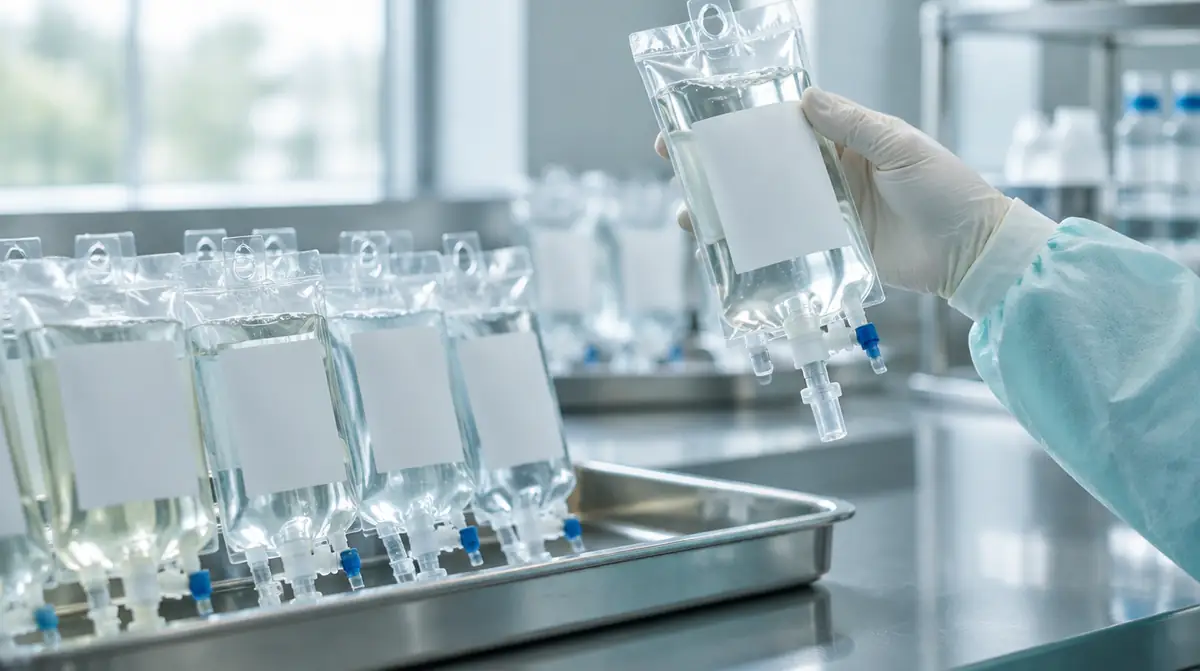
- Cytotoxics have a narrow therapeutic margin: underdosing reduces efficacy, overdosing increases toxicity.
- Their preparation follows the general chapters of the BPP and two guidelines: sterile preparations and hazardous substances.
- The SFPO recommends checking every preparation, favouring analytical, gravimetric or digital methods.
- Analytical control of the finished product verifies the molecule, concentration and solvent before release.
What sets cytotoxics apart
Cytotoxic drugs have a narrow therapeutic margin. Underdosing reduces the efficacy of treatment, overdosing increases its toxicity. The dose is calculated for each patient (body surface area, weight, renal function, tolerance of previous cycles) and can change from one cycle to the next.
Their preparation is centralised in a dedicated unit of the hospital pharmacy, in an isolator or biological safety cabinet, to protect both the product and the operator. Volumes are high and deadlines tight: in the day hospital, the patient is waiting for their IV bag.
Why stronger control is essential
What the regulations say
The preparation of injectable cytotoxic chemotherapies follows the general chapters of the Good Preparation Practices, guideline 1 (sterile preparations) and guideline 2 (substances that may present a risk to health and the environment). As for any preparation, the control strategy follows from the risk analysis.
The SFPO recommendations are more specific: a check must be carried out for every preparation, and it is desirable to replace visual double-checking with analytical, gravimetric or digital methods (recommendation no. 17). Release testing should rely as much as possible on these new technologies (recommendation no. 41).
Control methods in practice
| Method | What it checks | Main limitation |
|---|---|---|
| Visual double-checking | The steps and the volumes drawn, by eye | 3 dose errors out of 7 not detected in simulation (Carrez et al., 2017) |
| Gravimetric control | The masses, and therefore the volumes added | Does not confirm the identity of the molecule |
| Video control | The course of the preparation, recorded | Does not measure the final concentration |
| HPLC | Identity and concentration | One method per molecule, a dedicated laboratory, turnaround times hard to reconcile with continuous release |
| Rapid analytical control (QCRx®) | The molecule, concentration and solvent, on the finished product | Requires acquiring the system |
Analytical control in oncology
The QCRx® combines UV-visible spectrophotometry and Raman spectroscopy. From a sample of the finished IV bag, it confirms the molecule, concentration and solvent in under 70 seconds, then archives a time-stamped report. The preparation can be released without waiting for a laboratory result.
For large volumes, dose standardisation also allows deferred batch control, without disrupting day-hospital flows. This is the approach followed by Paris Saint-Joseph Hospital.
In an anticancer drug preparation unit, every IV bag is a release decision. Checking the finished product turns it into a decision based on a measurement.
Frequently asked questions
Why check chemotherapy preparations?+
Is visual double-checking enough?+
How long does a check with the QCRx® take?+
Does analytical control slow down release?+
- ANSM, Good Preparation Practices, 2023 edition (decision of 21 July 2023, in French): guidelines 1 and 2
- SFPO, 2019 recommendations on the preparation of injectable anticancer drugs (no. 17 and no. 41)
- Carrez L. et al., J Oncol Pharm Pract, 2017: simulation of visual double-checking at Geneva University Hospitals